Prototype de PCB en toute simplicité

Service complet de prototypage de PCB personnalisé.

Surface Finishing

Powder Coat - Matt paint

Powder Coat is widely used in industries such as metal products, furniture, and automotive components, creating a durable, wear-resistant, and corrosion-resistant surface coating through electrostatically spraying powder coating.

Get a quote

Introduction to Powder coat - Matt

Powder coat - Matt
Powder coat - Matt
Description

This is a process where powdered paint is sprayed onto a part that is then baked in an oven. This creates a strong, wear- and corrosion-resistant layer that is more durable than standard painting methods. A wide variety of colors are available to create the desired aesthetic.

Colors:

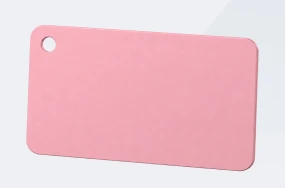
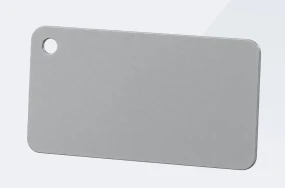
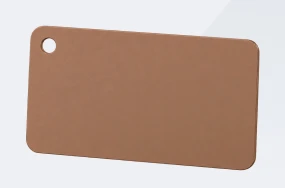
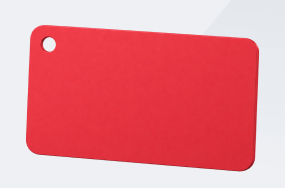
Applicable to all pantone colors-Matt

Technical Properties

Applicable Sharp edges and burrs Premium appearance availability Tolerances
Metals Removed Yes Met before surface finish (Powder coating thickness from 0.1-0.3mm)

Added durability in a variety of colors and finishes

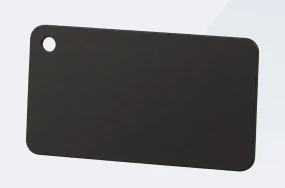
Process Black

Process Black

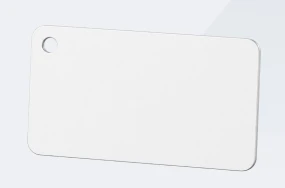
PANTONE Matt White

PANTONE Matt White

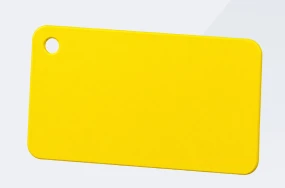
PANTONE Yellow  U

PANTONE Yellow U

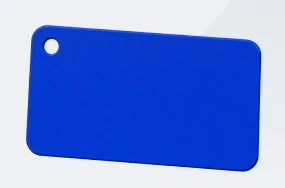
PANTONE Blue 072 U

PANTONE Blue 072 U

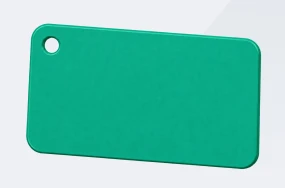
PANTONE Green  U

PANTONE Green U

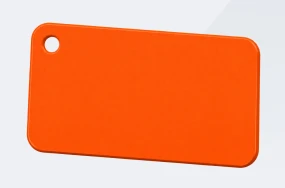
PANTONE Orange 021 U

PANTONE Orange 021 U

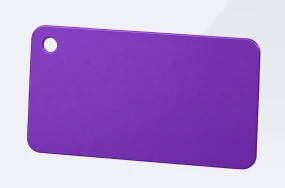
Purple U

Purple U

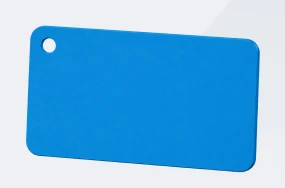
Process Blue

Process Blue

PANTONE Red 0331 U

PANTONE Red 0331 U

PANTONE Cool Gray 5 U

PANTONE Cool Gray 5 U

PANTONE 470 U

PANTONE 470 U

PANTONE Red 032 U

PANTONE Red 032 U

Example of a Powder Coat - Matt paint Part

Powder Coat - Matt paint

CNC Powder Coating Process Guide

1. Principle of the Powder Coating Process

Matte powder coating is an electrostatic powder coating process in which specially formulated matte powder is electrostatically deposited onto the surface of a metal workpiece, then melted, cross-linked, and cured at high temperature to form a low-gloss, diffuse-reflective solid coating. The matte effect is achieved through the use of matting agents and specific resin formulations in the powder coating, rather than through post-coating sanding or polishing. It can effectively conceal CNC tool marks, minor dents, and small surface pinholes, while providing better corrosion and wear resistance than conventional liquid paint. It is widely used for equipment enclosures, appliance housings, and structural or cosmetic metal parts.

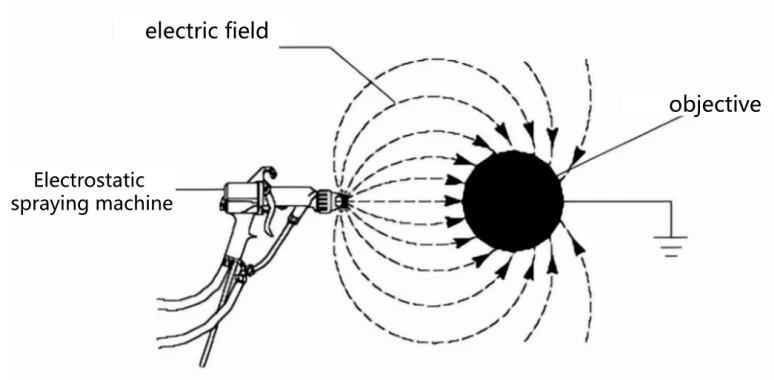
Powder Coating Process Principle

2. Characteristics of Powder Coating

A relatively thick coating can be achieved in a single application. For example, a coating thickness of 100–300 μm may require 4–6 applications with conventional solvent-based paint, while powder coating can achieve the same thickness in a single application. The resulting coating also provides excellent corrosion resistance.
Electrostatic powder coating and other advanced processes offer high production efficiency and are suitable for automated coating lines. Powder utilization is high, and excess powder can be recovered and reused.
In addition to thermosetting powders such as epoxy, polyester, and acrylic, a wide range of thermoplastic resins can also be used as powder coatings, including polyethylene, polypropylene, polystyrene, fluorinated polyether, nylon, polycarbonate, and various fluorinated resins.

3.Powder Coating Process

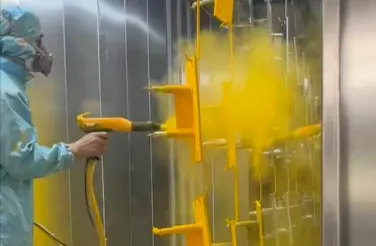
Electrostatic spraying uses a high-voltage electrostatic field to charge coating particles and cause them to move toward the workpiece under the influence of the electric field, allowing the particles to adhere to the workpiece surface. Typical electrostatic powder coating equipment consists of a spray gun, powder cup, and high-voltage electrostatic power supply.

Powder Coating Process

4. Brushed Texture Classification

Finish Grade 60° Gloss Reference Typical Surface Appearance Common Applications
Semi-Matte / Satin Matte 30–50 GU Subtle reflection, smooth feel, and good resistance to dirt and scratches Medical equipment, cabinets, appliance housings
Standard Matte (General Purpose) 10–30 GU Balanced matte appearance with uniform light diffusion; the most common industrial finish Equipment enclosures, control panels, furniture hardware
Ultra-Matte <10 GU Almost no visible reflection with a strong matte effect; minor scratches are more visually noticeable Light-shielding equipment, professional tooling, parts with special appearance requirements

5.Glossy Powder Coating Finish Classification

Finish Grade 60° Gloss Reference Typical Surface Appearance Common Applications
Satin Gloss (Low Gloss) 50–70 GU Slight mirror-like reflection with soft highlights; less prone to showing fingerprints and provides a smooth surface appearance Equipment panels, cabinets, outdoor sheet metal parts
Standard Gloss 70–90 GU Clear mirror-like reflection with a full, uniform coating; slight orange peel is a normal characteristic of the process Equipment enclosures, decorative panels, cosmetic hardware
High Gloss >90 GU Near-mirror finish with sharp reflections; requires extremely high standards for substrate flatness, pretreatment, and coating process, as minor scratches and particles are easily visible High-end decorative parts, display housings, customized cosmetic parts