CNC machining supports a wide range of materials, from metals and plastics to composites. Choosing the right material is essential for achieving the required strength, performance, appearance, and cost efficiency. This guide explains common CNC materials and how to select the best option for your application.
How to Choose CNC Machining Materials
When selecting CNC machining materials, several factors should be considered, including the part’s operating environment, performance requirements, machining difficulty, and overall cost. Different materials offer different levels of strength, weight, corrosion resistance, and machinability. The right material should be selected based on the specific application requirements.
● Mechanical Properties: Material selection should be based on the load and stress requirements of the part. High-strength or wear-resistant components may require materials such as alloy steel, tool steel, or titanium, while general structural parts are often made from aluminum alloys.
● Weight Requirements: For lightweight applications, aluminum offers an excellent strength-to-weight ratio. Titanium can be considered for applications requiring higher performance and weight reduction.
● Corrosion Resistance: For outdoor, humid, or chemically exposed environments, materials such as stainless steel, titanium, or corrosion-resistant plastics are recommended.
● Temperature Resistance and Thermal Conductivity: High-temperature applications may require materials such as tool steel or PEEK. Aluminum and copper are commonly used for heat dissipation and electrical conductivity applications.
● Machining Cost: Materials with good machinability, such as aluminum, brass, and POM, typically provide higher machining efficiency and lower processing costs. High-performance materials such as titanium and tool steel generally require more complex machining processes and result in higher costs.
In general, aluminum is one of the most widely used CNC machining materials due to its excellent machinability, strength, and cost-effectiveness. For specialized requirements such as high strength, corrosion resistance, high temperature resistance, or electrical insulation, dedicated materials should be selected accordingly.
CNC Machining Metal Materials
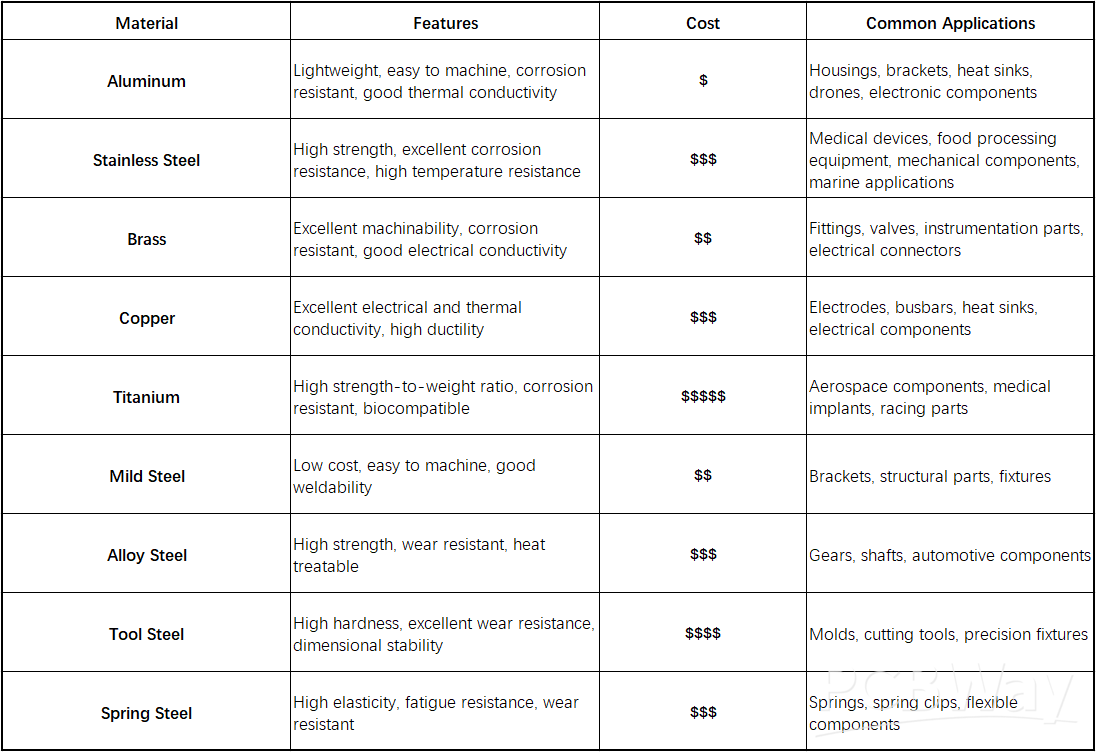
CNC common metal materials including Aluminum, Stainless steel, Brass, Copper, Titanium, Mild steel, Alloy steel, Tool steel and Spring steel. The following is a comparison of the materials.
CNC Machining Plastic Material
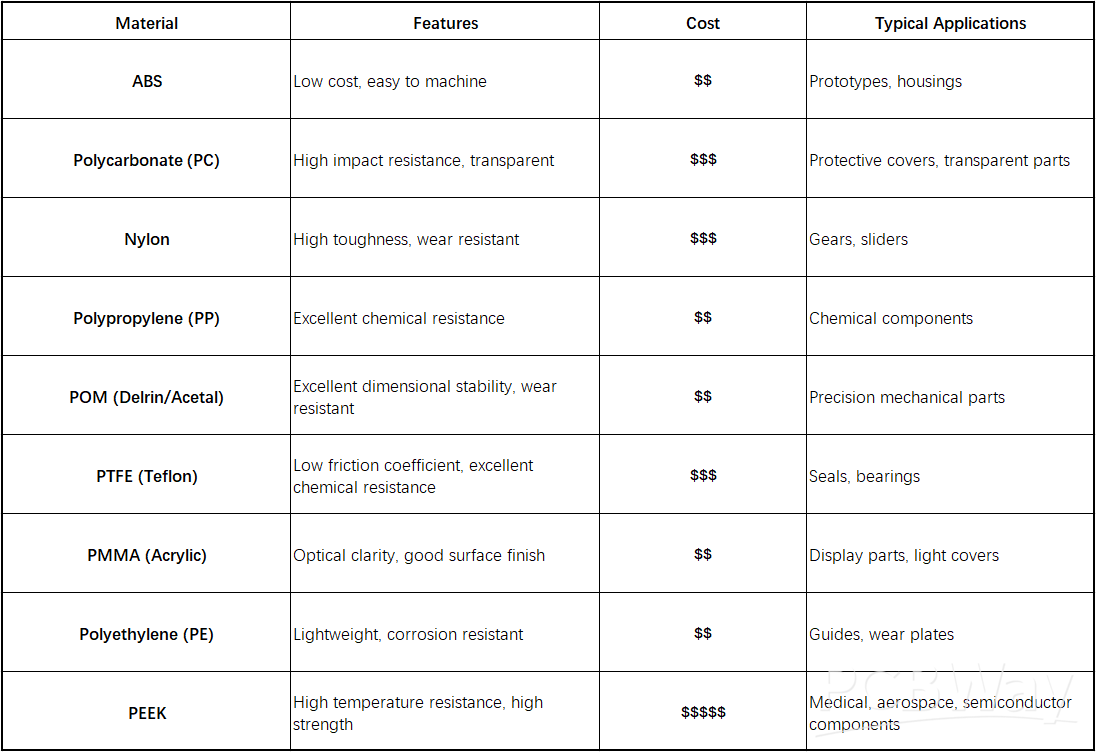
CNC common plastic materials including ABS, Polycarbonate (PC), Nylon, Polypropylene (PP), POM, PTFE (Teflon), PMMA (Acrylic), Polyethylene (PE) and PEEK. The following is a comparison of the materials.
Composite and Specialty Materials
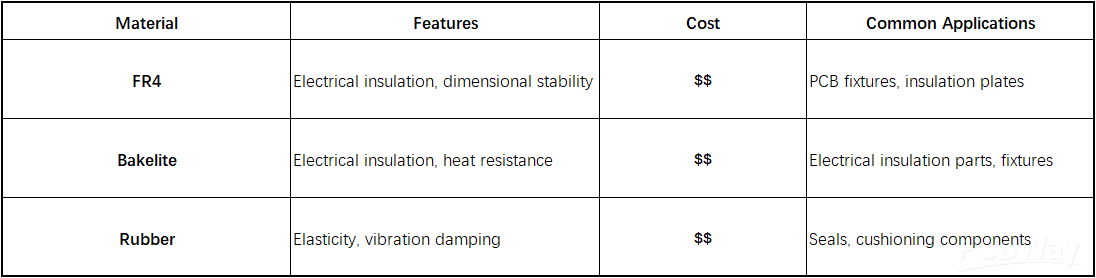
CNC composite materials including Bakelite, FR4, Rubber. The following is a comparison of the materials.
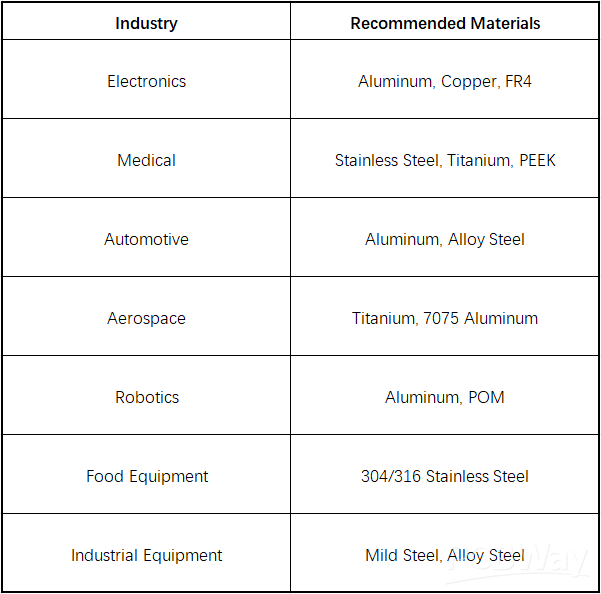
Recommended Materials by Industry
How Materials Affect CNC Machining Costs
Material selection not only determines part performance but also directly affects CNC machining costs. Different materials vary in raw material price, machining difficulty, tool wear, and processing time.
1. Material Cost
Raw material prices vary significantly between materials. Aluminum, ABS, and POM are relatively affordable and suitable for most prototypes and general-purpose parts. High-performance materials such as titanium, PEEK, and tool steel are more expensive and are typically used for specialized applications.
2. Machining Difficulty
Material hardness, toughness, and cutting characteristics affect machining efficiency. Materials with good machinability, such as aluminum, brass, and POM, allow higher cutting speeds and shorter machining times. Materials like titanium, stainless steel, and tool steel require slower cutting speeds and more advanced machining processes.
3. Tool Wear
Hard or abrasive materials can accelerate tool wear, increasing tool replacement frequency and machining costs. For example, titanium and tool steel typically require more tooling resources compared with aluminum.
4. Surface Treatment Costs
Some materials require additional surface treatments to improve appearance, corrosion resistance, or wear resistance. For example, aluminum is commonly anodized, while stainless steel may require passivation or polishing. These additional processes can affect the final cost.
5. Material Utilization
Material size and part design also influence costs. For expensive materials, optimizing part geometry and reducing material waste can help lower overall manufacturing expenses.
Common CNC Material Selection Mistakes
● Avoid Choosing High-Strength Materials Unnecessarily
Materials such as 7075 aluminum and stainless steel provide higher strength but usually involve higher machining difficulty and cost. For general structural parts, 6061 aluminum is often sufficient.
● Consider Aluminum for Appearance-Critical Parts
Plastics are more prone to deformation, scratches, and inconsistent surface appearance. Aluminum parts can achieve a premium finish and improved durability through processes such as anodizing and bead blasting.
● Use Metal for Load-Bearing Threads
Plastic threads can wear out or strip under repeated assembly or high loads. For critical threaded features, aluminum, steel, or other metals are recommended.
● Avoid Standard Plastics in High-Temperature Applications
Common plastics such as ABS and PC may soften or deform under high temperatures. High-temperature applications should use engineering plastics such as PEEK, PTFE, or suitable metal materials.
Choosing the right CNC material depends on the part’s requirements, working environment, and budget. By understanding material properties and machining considerations, you can make a more efficient and cost-effective choice for your project.
PCBWay provides CNC machining services with various material options, precision manufacturing capabilities, and professional support to help turn your designs into high-quality finished parts.